Home Blog Page 4

Kitchen Island – Easy To Add Addition Every Kitchen Should Have

Kitchen Island – Easy To Add Addition Every Kitchen Should Have

Make your kitchen the gathering space it used to be by adding a kitchen island. But, first, learn the basic measurements and features you need before you buy.
At one time, the heart of every home was the kitchen, but with today’s busy schedules and catch-as-catch-can relationships, your kitchen, like so many others, may have become the most ignored room in the house.

It’s a shame since so many of our cherished childhood memories revolve around the busyness of cooking and gathering in the kitchen for holiday fun, complete with the warmth of Christmas cookies and the aroma of that stuffed till bulging slow-roasting turkey in the oven.

It’s hard not to associate the idleness of a kitchen with the separation of loved ones and the death of tradition.

So, putting sentiment aside, what can a homeowner do to bring back interest in the kitchen? How can a family be coaxed out of the TV room back into the room that was once the gathering place for warmth and refreshment?

The answer is simple; introduce an island. It is an easy-to-install kitchen furniture piece that instantly creates additional workspace, an attractive serving station, more storage, or expanded entertaining accommodations.

Think about it. A kitchen island is a perpetual invitation to “come and sit” and do homework, read the newspaper, or enjoy a freshly brewed cup of coffee. It’s a pit-stop for visitors—a casual dining area—a functional focal point dividing the kitchen from the rest of a large melded great room.

Unfortunately, every kitchen is not suited for an island. They perform best in kitchens designed in the shape of an L, U, or even a G with a minimum of 121/2 to 13 feet wall to wall or cabinet to cabinet. A smaller space will not provide enough room and create cramped frustration.

Prepare yourself before shopping for a kitchen island by identifying the features or functions the island must provide. For example, you may utilize the additional room to test recipes and prepare meals, then a butcher block top with no seating is the best choice. On the other hand, if the kids are underfoot and homework needs to be supervised, consider a dual-purpose laminate or recycled surface with kid-friendly seating.

When children do not need to be factored in for more formal use, and entertaining is the priority, go glamorous with marble, cement, or molding embellishments with corbels and posts of elegant hardwoods such as Cherry and Oak.

Don’t overlook the benefit of additional storage. What kind of storage is needed?

Cookbooks, cookie sheets, and pans require a different design than an island for entertaining, where you might need a wine rack or table linen drawers. Consider the traffic pattern your new kitchen island will create. Does it block the refrigerator door from opening all the way? Will it bump into your butt every time you pull a yummy out of the oven? In other words, identify the specific characteristics needed before you buy for a perfect kitchen island experience.

One last thought, if it’s not too much of a hassle, consider adding additional track or custom hung accent lighting above the new island. It will add to the “wow” factor of your fresh and oh so wonderfully inviting kitchen addition!
Furniture Store Table Buying Guide

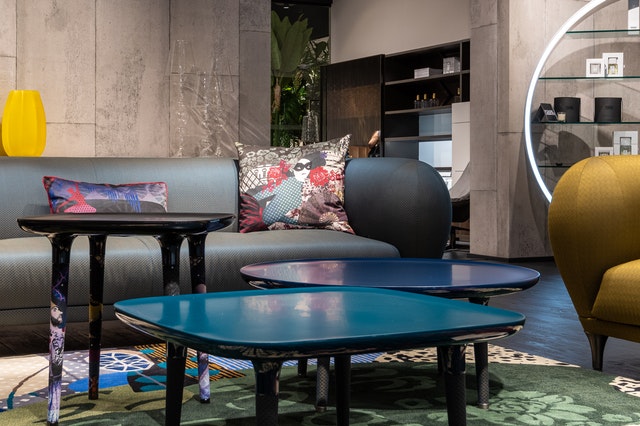
Learn the pros and cons of laminates, veneers, glass, or grooved tables before visiting the furniture store with this informative table buying guide.

Every home needs at least one table. Be it a desk in a home office, a dining room table ensemble, or a heavily used coffee table in the living room, few homes would be complete without one or more tables in every room.

Though every room may need a table, not all tables are suited for rooms. Tables are being sold in furniture stores today that need a word of caution. These tables will look great in the showroom; they may appear to be the perfect addition to that personally designed living space, but buyer beware; choosing one of these tables may cause daily, though often unspoken: regret.

Tables in the furniture store don’t need a salesperson; they are designed to speak for themselves, using visual appeal. Most are beautiful, fit perfectly into any room, and can easily accent any decorating style, be it modern, contemporary, minimalist, or any favored scheme the buyer is attracted to. Though function is essential, design often plays a big part in the choice of tables. However, within these attractive design features lies the hidden disadvantage of owning one of these tables.

Wood Veneers or Laminates

These are the most deceptive. They look fantastic in the showroom. The redwood or oak finish is perfect for that formal dining room. What’s not to like about this table? But, unfortunately, it’s a veneer or, even worse, a laminate.

Veneers are thin wood pieces connected to slabs of wood composite materials. Laminates are printed strips of wood grain on plastic, foil, or paper and glued to a pressed wood base or variation base. Both will look great for a few years, but, especially in the case of a dining room table, the constant damp washing after daily use will begin to warp the edges of the table.

Water seeps underneath that beautiful facade and swells the cheaper wood underneath, significantly if the table extends in the middle. The middle seam will be the first to start showing these signs of swelling.

Edges will begin to rise and pop up. Then, the glue starts to dissolve, and, from that point, it’s only a matter of time before the table is a visual irritation.

Pine

The problem with pine, though it holds a beautiful finish, is that the wood is too soft. Within just days of regular use, indents, scratches, and stains will be noticed. Such soft sheets of paper protection must be used to prevent leaving pen or pencil impressions when using a pine table for a writing surface.

It’s a better wood for outdoor picnic tables, or when the goal is to create a worn, country look in your kitchen, we’re beating up; shabby weather furniture is the design scheme. Pine will work well in any room in which minimal use is needed. It’s perfect for supporting a lamp, books, or photos, not so good for a high functioning secretary, dining, or coffee table.

Glass

Avoid choosing a clear glass dining table, living room coffee table, or bedroom nightstand at all costs, especially if it has a frosted finish underneath. These tables displayed at the furniture store are the highest maintenance tables ever to enter the interior decorating scene.

It is an exercise in futility to keep them clean and streak-free, but they also attract dust like a magnet. The frosted finish underneath will grab and never release oils, little handprints, or any other liquid that comes in contact with it, leaving a shabby, dirty look, despite the most significant efforts to remove them.

A glass table also risks scratching and accidental shattering. Therefore, warnings are often included with the table, cautioning the user against setting high heat or extra cold items on the table to avoid this risk of shattering. Glass tables are perfect for the wealthy since only a maid would tolerate the constant cleaning of this horizontal surface requires.

Grooved or Planked

Turn and walk away from any table, no matter how beautifully designed, finished, or shaped, incorporating grooves (planks) on the top’s surface. Preventing a build-up of small food crumbs, dusty clumps, and other unidentifiable particles will constantly be frustrating.

Have a toothbrush and dustpan handy to keep this table attractive. Any level of groove on the surface will collect daily dirt, so unless you enjoy tedious cleaning, stay away from this table design.

If this is truly a “must-have” table, consider using it in a protected outdoor setting where the constant brushing off of collected crumbs won’t be an issue.

Criticism aside, all tables above have been incorporated in homes for years because they fit into a budget or complement their interior design scheme. Keep in mind that a glass table is better suited for accent tables in a living room or bedroom. Pines are best used to display books or as an entertainment cabinet for more sedentary purposes. Veneers are slivers of fine wood and will offer a dining room service for a few good years. Finally, planks will always be a high-maintenance design, while laminates are simply a waste of money.

Bottom line; the best tables to buy in the furniture store for any room in the home are solid tops made from hardwoods. Hardwoods perform superbly throughout time and antiquity. They will be functional, beautiful, and always worth the investment in any interior home decorating space.

Some Unique Ideas to do Online Shopping this Christmas

Shopping online for Christmas can save you time and mad rush in the busy holiday season and sound money.

Are you interested in some vintage Christmas decorations? Are you looking for them online? In this article, we will explain ways to search for a good bargain, faster and easier with a much more extensive selection to select from, and ways to avoid the crowds during holidays by shopping on the internet.

Many buyers and hobbyists are now following an ever-increasing trend of buying online for their favorite items. Of course, some people still enjoy the festive hustle and bustle, doing shopping in the same old fashioned way by visiting the big stores but still, large numbers of people have now started opting for the online medium to do their holiday shopping as they can easily do everything from the comforts of their house.

For all those interested in purchasing Christmas decorations, many retail stores may not have the stuff you may be looking for. Search for something specific is much easier if done online as there are thousands of decorations out there available to you from many trusted sites like eBay and Amazon, to name a few.

Some benefits of shopping online for Christmas are:

  • You may choose from a broad range.
  • You can find what you want in the shortest amount of time.
  • You can do comparison shopping, saving money and time.
  • Can successfully avoid the rush during holidays.

Where to search for a good selection and best bargain vintage Christmas decorations on the internet:

eBay is undoubtedly the best place to find decorations and ornaments if you intend to shop for holiday collectibles for self-use or somebody close to you.

Another good place is Amazon, as you can quickly narrow down your online search or even find some item that is much better than you were initially looking for. Again, it’s excellent as you can read the review of others and can get an honest opinion on what you are seeking. You will also see some good discounts on such sites.

Some options on such sites also make provisions for making sure that these Christmas gifts arrive just within 24 hours after the placement of the order by you. Though shoppers may have to pay a bit more in such cases, only this money is well spent for those last-minute shoppers!

Shopping online for Christmas will help you in avoiding that holiday rush:

Have you ever noticed that you needed some item just at the last minute and rushed to a store to find that it had been sold out or had to wait for a long time with many other shoppers? It creates undue stress in our minds in otherwise enjoyable holidays.

All those who go out shopping in traditional stores often find this exercise taxing as they have to find parking spaces (which is just impossible this season). Due to all this, online shopping helps you escape all this chaos of those traditional stores.

Also, you can compare the costs of things you want to buy:

The flexibility to do comparison shopping from the comforts of your home is an excellent benefit of online shopping. When looking for anything, and at the same time you intend to compare the prices or quality, you can do that easily as you can make the comparison by visiting two different sites of competitors on the internet. It is much easier than hopping from one store to another to t search for the item and compare their prices.

Another significant benefit of purchasing online is buying those items available at far-off stores. People who try to limit their shopping to all those traditional stores limit the vast range of products available to them.

In the traditional style of shopping, people can buy only those items displayed physically in the stores, but by shopping online, you can scan the stores all around the world for a specific item. Therefore, looking for a rare thing cumbersome to locate is incredibly beneficial.

The Clean Style and Quality Manufacturing of Amish Furniture

Amish furniture may refer either to the manufacturer or to a style. This brief guide introduces some popular types of indoor Amish furniture.

The phrase “Amish furniture” refers to the people who manufacture the furniture and a style of home furniture. This quick guide should help in choosing quality Amish furniture.

Who are the Amish?

“Amish” refers to a Christian religious group that split from the Mennonites in 1693. Jacob Amman promoted stricter adherence to some Anabaptist teachings than the Mennonites were practicing. In the 18th century, the Amish began migrating from Europe to North America; most lived in several American states and Canadian provinces.

The traditional Amish lifestyle has a rich heritage in farming and craftsmanship. Their simple lifestyle avoids most modern conveniences and ignores fashion trends in clothing. More background on Mennonite, Amish, and Shaker products may be interesting.

Crafting Amish Furniture

Amish furniture is generally created by small teams of artisans on farms. There is no “Amish Corporate Enterprises Inc.” that designs and builds the furniture. Instead, small or medium-sized businesses put their quality imprint on their products.

The furniture is then marketed using modern warehouses, distributors, and retailers. In addition, Brick-and-mortar stores and online retailers advertise through various media: flyers, newspaper or television ads, or via the Internet.

Custom Amish Furniture

Many retailers will take custom orders for home furniture and pass them to their Amish furniture manufacturing partners. Because the workshops are less automated than typical manufacturers, they can better respond to specific customer requirements.

Some other furniture brands may customize the type of wood or the stain color. By contrast, custom Amish furniture may be built to a specific size: “Please make our bookcase three inches deeper, that will suit that room’s shape.” Of course, a variety of woods and finishes are offered as well.

It is vital to confirm a retailer’s custom order policy. Wisdom also suggests checking whether there are additional costs for requesting specific changes.

Furniture Styles Made by the Amish

Many of these Amish craftsmen make furniture in a variety of styles. Some of the likely, and unlikely styles offered by an Amish furniture retail store are “Amish,” “American Country,” “Mission,” “Shaker,” and “Queen Anne.”

What is Amish Style Furniture?

No one concept can include all independent workshops. However, the usual criteria include: simple design and solid construction from natural materials sourced locally rather than imported; finishes include stains or paints. Some retailers say that “Amish” is not a style but rather an approach to quality.

Amish furniture in Pennsylvania is known for painted wood and trim. Several Ontario manufacturers include abstract decorations or inlaid designs and staining to highlight the wood grain.

What is American Country Style Furniture?

“American Country” furniture is made from various natural woods using a quiet color scheme. It has a simple appearance and is not ornate. It eventually developed into other furniture styles, including both Amish and Mission.

What is Mission Style Furniture?

Gustav Stickley originated “Mission” furniture due to the heavily embellished Victorian style. Like “American Country” features simple designs in natural materials, using straight vertical & horizontal lines and flat rectangles. It is associated with Spanish religious missions in California.

What Is Shaker Style Furniture?

The Shakers, a distinctly different Christian religious group, designed and built functional but straightforward furniture to promote their “modesty, harmony and order.” Their chairs, for example, are sturdy with three slats in the back; but light enough to easily hang from pegs to make space in their meeting rooms. Today, with this religious movement nearly extinct, Shaker furniture is manufactured by the Amish and others.

What is Queen Anne Style Furniture?

The Queen Anne style is more elegant and elaborate. It uses curved “cabriole” legs with carved feet or carvings such as shells or fans. While some Amish workshops build Queen Anne furniture, the style significantly departs from the Amish style.

How to Select Quality Amish Furniture

Selecting Amish furniture starts with researching the quality of the finished product. Check for solid wood versus veneered pressboard. Some other manufacturers may not offer a “solid wood” option. Read carefully because some drawer bottoms or shelf backs may not be solid wood.

Remember that natural materials fade in sunlight or swell, shrink, or crack due to changes in humidity. Therefore, any fine wood home furniture needs more care than metal or plastic.

As with any significant purchase, comparison shopping is essential. Ensure that the materials and design are equivalent before comparing prices. Include delivery or warranty options in the cost analysis.

Although Amish furniture is often first considered for the dining room, the Amish make excellent bedroom furniture. Whether new or used, we are selecting Amish furniture means creating a solid long-term investment in home furnishings.

Shaker Furniture is Christian furniture in wood.

Shaker furniture embodies their practical and straightforward Christian religious values using well-crafted wood. But, do Shaker furniture manufacturers still exist?

The appeal of Shaker furniture is found in simplicity and solid craftsmanship. Are Shakers related to the Amish or Mennonites? What defines Shaker furniture?

Who Are the Shakers?

The Shakers branched from the English Quakers in the mid-1700s. During the mainly-silent Quaker worship service, shakers began shaking, whirling, and speaking in tongues.

After her conversion, “Mother” Ann Lee helped establish Shaker beliefs and practices, including celibacy, communal living, and pacifism. Under her leadership, the Shakers began settling in the eastern United States about 1775.

Eventually, the Shakers became respected for their farming, well-organized community life, and inventiveness. Circular saws and clothespins are just two of their contributions to society, but their distinctive solid wood furniture style is the most famous.

Membership in Shaker communities peaked at about six thousand members during the 1840s. After that, their numbers dwindled, especially in the late twentieth century.

This village in Maine claims to be the last functioning Shaker settlement. Their primary work is farming, but they manufacture some “fancy goods” and “small woodenware.”

What is the Shaker Furniture Style?

The Shakers are renowned for sturdy, simple, austere, lightweight solid wood furniture using locally-available materials. Shaker furniture style is effortless and practical.

Shaker furniture designs, and indeed all Shaker inventions, combine simplicity and economy of materials with the practical solution to accomplish a task. By a century, the Shakers thought about “functionalism.”

White paint is an alternative to grain-revealing finishes. There is a picture of white Shaker furniture in the second picture below. Shaker kitchen cabinets, even though the metal hardware looks from the modern world at first.

Typical Shaker Furniture: Chairs, Dining and Bedroom Furniture

In the first picture (above), the Shaker side chair has three slats at the back. Due to its solid construction from relatively thin planks, it is both light and sturdy. The lightweight was essential so the chairs could be hung on pegs, out of the way during the whirling and shaking service.

Shaker artisans also made the peg rails upon which to hang the chairs. With about a one-foot distance between pegs, the chairs could be hung side-by-side without getting banged together.

Shaker bedroom furniture pieces, such as Shaker cabinets, were also simple in design and execution. The wood is preserved but not ornamented, as seen in the Shaker bureau and sideboard pictured. There is no fancy hardware, carving, or scrollwork.

The third image shows that a Shaker dining table was made of long pine boards. The tight joints were important for cleaning since they did not set a tablecloth.

Are There any Shaker Furniture Manufacturers Today?

Due to the declining number of authentic Shaker communities, it is unlikely that Actual Shakers have manufactured shaker furniture in recent years. However, other people do manufacture Shaker-style furniture. Furthermore, since the Shakers rarely patented any of their inventions, it is legitimate to copy their style.

Indeed, some Amish craftsmen have become Shaker furniture manufacturers. They previously made basic solid wood furniture by hand. They are very successful in making furniture in the Shaker style and others. Some Amish now manufacture various high-quality goods and sell them through retail partners.

Amish, Mennonites, and Shakers

The Amish broke away from their fellow Swiss-German Mennonites in the 1690s and later divided into smaller groups. Some moved to North America, where farmland and religious tolerance were available.

The Amish and Mennonites share many values with Shakers, such as pacifism and a preference for simplicity. Some also live separate from “the world.” However, their historic European roots in Switzerland and Germany differ from those of the Shakers and Quakers from England.

Distinguishing Shaker Furniture from Amish or Mennonite

Some traditional Mennonite furniture from the 1700s included decorative inlays, carvings such as birds or tulips, and some colorfully painted highlights. Modern Amish artisans also produce work in American Country, Mission, or the more decorative Queen Anne styles.

Online sales catalogs, or travel to Shaker museums, will provide the background needed to recognize, appreciate or purchase excellent modern pieces of Shaker furniture.

Introducing Mission Furniture and the Mission Style

Mission furniture remains popular a century after its introduction. So where do Stickley and Arts & Crafts Furniture fit within the mission-style?

Who made the first mission furniture? Who developed and commercialized mission-style furniture? What distinguishes mission furniture? Is it available today?

Spanish Missionaries Pioneered Mission Furniture

“mission” honors the Spanish missionaries to California and the American southwest. As true pioneers who first arrived in the mid-1700s, they made furniture for their mission chapels and their own living spaces.

Five factors influenced their furniture: culture, religion, skills, tools, and materials. As a result, these missionaries were both inspired and limited:

  • Their Spanish cultural heritage led them to incorporate certain design elements into their furniture.
  • Their Roman Catholic heritage also contributed to their design esthetics, especially for chapel furniture.
  • Limited carpentry skills may have kept them from fully achieving their design goals – they were missionaries rather than artisans.
  • Limited tools may also have played a part – they started with what they had brought.
  • They used the available materials, such as cottonwood, Douglas fir, spruce, and yellow pine in the American South-West; mahogany, rosewood, and more exotic woods in Mexico, Central America, or the West Indies.

So the Spanish missions in the Americas originally had simple furniture designs, mainly due to the available tools and skills. This necessity became a virtue a few centuries later.

Gustav Stickley Commercialized Mission Furniture

Gustav Stickley was inspired in the late 1890s by the European “Arts and Crafts” movement, which stressed simplicity and honesty in design and manufacture. So he began a venture in New York State called “United Crafts.”

Stickley also appreciated “American Country Style,” which featured soft colors, natural woods, and simplicity of design. Stickley dedicated his company to building quality furniture in style, combining these European and American sensibilities.

At a Michigan trade show in 1905, his company displayed a new product line described as “simple furniture built along mission lines.” The warm reception for these products was the foundation of mission-style furniture.

The Main Features of Mission Furniture

Mission furniture uses natural materials: locally-available wood with iron or copper fittings and covered by canvas, cloth or leather. Dark stain finishes emphasize the joinery.

The mission style is simple, using straight horizontal and vertical lines and flat rectangular areas. It stepped back from the embellishments, such as the carved curves found in Victorian furniture.

The Current State of Mission Style Furniture

Mission furniture remains popular and available through “brick and mortar” retail outlets and online discount retailers. It is elegant in its simplicity, well-built and practical in bedrooms, dining rooms, and home offices.

If local retailers do not carry “mission furniture,” search for other names online. In England, seek “Arts and Crafts Furniture.” Other terms are “Craftsman furniture,” a trading name used by Stickley, and his name remains linked to this style.

Alfred and Aminy Audi bought Stickley’s company, manufacturing quality furniture. Others, including small Amish workshops, also manufacture high-quality mission-style furniture.

Plus Size Fashion-Home Decor’s Top Trend is Full-Figure Furniture

Full-figure fashion has branched out. Plus size furniture is the latest home decor trend for ample bottoms.

As more and more North Americans grow ever more significant, the need has developed for furniture to accommodate those bigger behinds. The home decor industry has stepped in to fill that void with the development of plus-size furniture. Just as fashionable as your typical home decor, this new fat-friendly furniture is sturdy and extra roomy.

Plus Size Dining Room Chairs

If you had ever had company come over and slightly winced when a plump person plopped down at the dinner table, you would be able to appreciate the availability of extra-wide dining room chairs. With ample room for a great bottom, these plus-sized chairs have a weight capacity of 500 pounds. So no matter how much turkey and stuffing they pack away, this full-figured furniture is up to the task.

Maybe huge load-bearing bar stools are more your style? Counter stool height with an extra-large cushion, these stools are unexpectedly comfortable regardless of your size. Instead of trying to squeeze four regular-sized seats into a tight space, why not opt for three kings sized chairs instead. Your guests will appreciate the extra room and attention you have paid to their comfort.

Full Figure Camping Gear

If you love to go camping but are hesitant to try out a lawn chair because of your size, plus-sized camping gear might be perfect. Whether your favorite football team is the Dallas Cowboys, the Chicago Bears, or the Pittsburgh Steelers, these extra-wide NFL canvas chairs will envy the campground.

Complete with built-in cup holders and extra-wide armrests, these comfy chairs are great for around the campfire or even at a tailgate party. Unless you enjoy too many smores, the 500-pound capacity should be enough to hold your frame. Finally, turn in for the night in comfort with an extra-wide folding bed. Steel construction and reinforced springs make for a comfortable sleep for even the heaviest campers.

Finding Full-Figure Furniture

A leader in plus-size home decor is Brylane Home. Famous for their plus-sized fashions for men and women, Brylane now offers their loyal customers a comfortable option for their home decor needs. This online merchant provides free delivery throughout the US. In addition, Gander Mountain manufactures a comprehensive version of pedestal chairs, and National Business Furniture offers plus-sized office chairs.

Regardless of your choice, full-figure furniture is a trend that is likely to stay. North American bottoms are growing larger; now, they have sturdy land.

How to Create Work and Storage Spaces in Small Spaces

Ideas for creating extra work and storage spaces in a small home

If downsizing has left you short of space, here are some tips for making extra work and storage spaces.

Multi-Purpose Furniture

Take a look at furniture that can be used for more than one thing, such as storage space.

  • Hassocks. You can use hassocks as a footrest, storage space, extra seating, and a coffee table.
  • End and Coffee Tables. Shop for tables that have storage options, such as drawers and shelves.
  • Hope chest. Hope chests are great for storage, and you can use them for seating.

Adding Storage with Small Renovation Projects

  • Room Makeover. Don’t overlook odd spaces, like under the staircase. You can create an office nook under the stairs.
  • Make Maximum use of your Laundry Room. Build a counter above the washing and dryer if you need more room. With the front-load washer and dryers, this becomes a viable workspace option. You may also find space for additional shelving.
  • Porch. You can create extra space by enclosing your patio. Enclosed porches can create a sunroom—a different room and extra storage spaces.
  • Carport or Garage. Build or Install shelves and cabinets in your garage or carport. Add a work counter. Do what you can to maximize your storage and workspace to organize your garage.
  • Bathroom Vanity. Exchange a pedestal basin for a vanity with counter and drawer space.

Under the Beds

You can use flat plastic storage bins for clothing or blankets. And under-the-bed shoe storage containers are a handy way to protect and store up to 14 pairs of shoes. If you have limited room beneath your bed, use risers.

Under the Counter

Consider installing drawers under your kitchen and other cupboards.

Behind the sofa

If your couch faces a wall, you can pull it slightly forward and store several pictures behind the sofa. Don’t overlook space under the couch.

Shelving

Add additional top shelves in your closet. Look for places where you can add shelves in various rooms of your home.

Hooks

  • Plant Hooks. Plants add a lot of atmosphere to your home. But they often require space that you don’t have. Install ceiling hooks. Wall hooks are often overlooked for house plants, though they are frequently used for outdoor plants.
  • Wall Hooks. Many items can be hung on hooks to save floor space. Add clips to your closets; great for hanging coats and robes. Wall hooks in utility closets allow you to hook items such as mops, brooms, and other small household supplies.
  • Over-the-Door Racks. Over-the-Door racks do not require installation and provide hooks for coats, hats, and scarves.

Decks

Your deck has plenty of storage. Box or tarp garden tools, pots, potting soil, and various gardening supplies and slide under your deck.

Baskets

Don’t overlook the little things. Save your drawer space using baskets for small scissors, craft supplies, or paperback books. A few strategically placed, attractive baskets can enhance your décor.

It doesn’t matter whether you’ve moved into a smaller house or your kids have moved back home with their things; storage space is often a juggling act. Be sure to do some housekeeping and sell or give away items you don’t use.

Furniture Hacks – Trendy Home Decor

Ikea Modification for Cheap & Trendy Home Decor

Ikea furniture hacking or modification makes achieving custom designer home decor simpler and cheaper.

No matter their budget, every homeowner desires pleasing home decor to suit their taste and lifestyle. With its budget-conscious, modern design, Ikea’s affordable furniture draws DIY homeowner’s and interior designers’ attention.

With some handy basic skills and a little imagination, you can have the designer home decor you’ve dreamed of.

Simple, Component-Based Assembly

Now, you can be your master carpenter! Ikea offers easily assembled furniture with a minimum of specialized tools or building knowledge.

With most furniture being compiled of component pieces, this simplicity inspires customization. You can use the item as intended or break it down and repurpose-purpose the individual pieces to fit a unique aspect of your home. Or you can use items in ways they were never intended for.

Shelves can be compiled into headboards or wardrobes and bookcases broken down to coffee tables and hidden storage. Leftover glass shelves become kitchen backsplashes. You are limited only by your imagination.

A Variety of Options

Ikea offers furniture in everything from raw wood, perfect for painting or staining to your preference, to various wood finishes and colorful lacquers. The simplicity of the majority of the designs is clean and modern and invites adding your flair. Even lacquered and varnished pieces can be sanded to a blank canvas and painted in any shade or design elements added with glue, foil, or nails, so your artistic expression can shine.

Additionally, Ikea offers compact, trim space furniture options. Furniture with hidden storage or converting functions like chair beds or sleeper sofas makes them more versatile for hackers.

Budget Conscious Furniture

Due to its storefront warehouse design, limited to large commercial centers, and the expectation that buyers do the assembly, Ikea can keep costs down. The brand offers a wide range of cheap and cheaply-made items and better quality furniture options like leather or mohair finishing. While more costly than more affordable options in the store, they are often bargain-priced next to comparable competitor pieces.

Ikea and other mass-market furniture retailers make it increasingly easy to customize furniture to suit your needs without a significant investment or handyman skills. From upholstering, painting, or dismantling, furniture hacks can be straightforward and make your space uniquely suited to your budget and taste.

Furniture That Lives on the Edge

“Live edge” wood furniture is an exciting design trend with the bold message that furniture comes from trees.

Once you see a piece of live edge wood furniture, you understand the buzz. It might be a thick wood tabletop with an uneven edge and eye-popping grain or a bold desk with an intriguing pattern of knots and other “imperfections.” This furniture style has a compelling visual impact, whatever its form and function. It’s also a growing trend on the vibrant edge of upscale interior design.

Crafted from a raw wood slab by a master woodworker, each piece of live edge furniture is as unique as the maker and the tree. It’s a design-forward, refined and sophisticated style that still looks like it was just sliced off a tree. The one-of-a-kind pieces are functional art that amplifies any décor, from post-industrial lofts to cozy traditional homes.

The style was first introduced by Japanese-American architect George Nakashima in the 1940s and is inspired by a distinctive Japanese design tradition of simplicity, respect for nature, and the elusive “wabi-sabi,” a kind of perfect imperfection. Revived by artisans in the 21st century, the live edge style is in sync with the spirit of our times. Made from salvaged or recycled wood, the pieces reflect a growing eco-awareness, a desire to incorporate nature into our homes, and a shift away from throwaway things to designs with a lasting impact.

The Cambrian layer beneath the bark in a tree is called the “living edge.” When the tree is cut into slabs, this layer is preserved in its natural, uneven form and defines the unique shape of the finished piece. In conventional lumber processing, the wavy edges, knots, twists, and divergent grains are removed and smoothed out to make a uniform piece of wood. Instead, live edge craftsmen value these quirks and flaws as the tree’s natural “beauty marks” and work with them to give the finished designs distinctive signatures.

Because of this, he was crafting live edge furniture that requires first-rate woodworking skills and then some. The wood is not uniform, and working with it can be full of surprises – decisions have to be made on the fly. Handling, preparing, and finishing huge raw slabs requires more physical effort than standard timber. To conserve the pure Cambrian layer, one artisan carefully removes the bark of the slabs one by one with a hammer.

Experienced live edgers insist that drying the wood properly before working is critical to getting good results. Some air dries the wood for months, even years; others combine perspective and kiln-drying, and others kiln-dry only. Large, thick, uneven wood pieces with knots and varying grains can warp, cup, crack, and split if not dried and handled correctly.

Many variations are determined by available wood species and the artisan’s preferences within the live-edge style. For example, Live Edge Design on Vancouver Island in British Columbia favors locally salvaged bigleaf maple slabs with dramatic forms and rich textures that define a vibrant West Coast style. Peter Bunnett in Ontario salvages damaged or diseased maple, oak, black cherry, and other eastern species in his forest and creates designs that optimize the shapes, colors, and character of these trees. Taking the concept from down-home to downtown, Toronto’s Urban Salvage repurposes city-cut trees into modern designs with an urban touch.

Some live edgers also sell raw slabs to other woodworkers or DIYers or let clients choose a slab to have custom-made into a design of their choice. So creating live edge wood furniture is a collaborative and dynamic process. And that makes it on point for the way we live today.

But in the end, it’s the furniture itself, its esthetic appeal, natural warmth, functional artistry, and spirited – even spiritual – a quality that make it a design choice for today destined to be appreciated for generations.